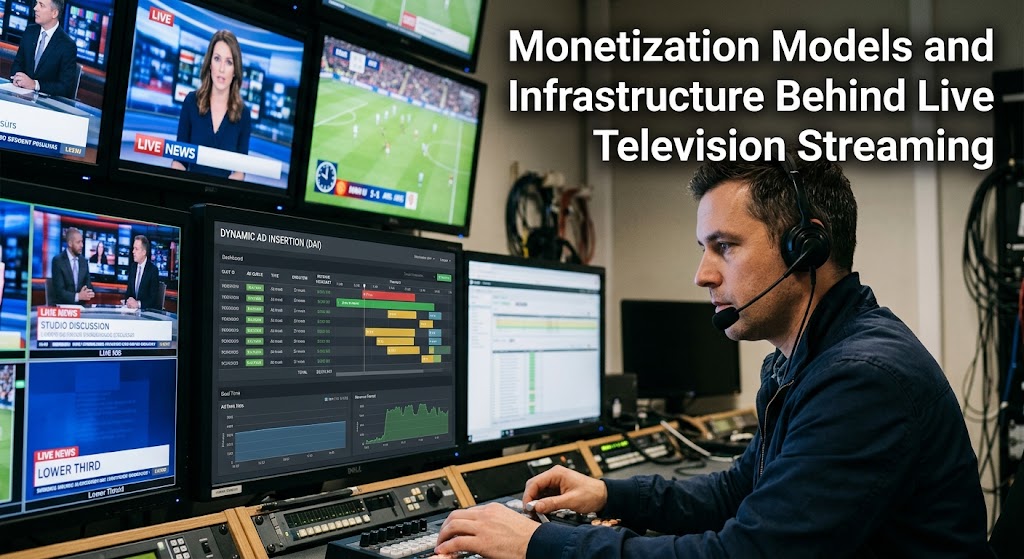
The old broadcast tower once looked untouchable. Now, much of that expensive machinery is being replaced by cloud servers, IP networks, and software that can spin up distribution capacity when audiences suddenly surge. live television streaming has turned broadcasting into something closer to a real-time digital business, where the program, advertising, audience data, and delivery infrastructure all move together.
The interesting part isn’t simply putting a TV channel online. It’s what happens after the viewer presses Play. Every session can become a monetization opportunity, while every second watched can produce another piece of operational data.

1. Live Television Streaming and Dynamic Ad Insertion Are Changing How TV Makes Money
The modern OTT model gives broadcasters something traditional television struggled to provide at the same granularity: the ability to personalize advertising for different viewers.
Dynamic Ad Insertion Happens Inside the Delivery Workflow
dynamic ad insertion allows an ad decision system to select advertising and place it into a live stream rather than sending exactly the same commercial break to everybody.
AWS Elemental MediaTailor, for example, can request personalized ads from an ad decision server, then create a viewer-specific manifest containing the selected advertising.
That creates a simple but powerful difference.
A viewer in London might receive an airline campaign. Someone watching the same program in Singapore could receive a mobile-service promotion.
The underlying television program doesn’t need to change.
Server Side Ad Insertion Feels More Like Normal Television
With server-side ad insertion, advertising is stitched into the stream before it reaches the viewer’s player. AWS describes this approach as a way to avoid complicated client-side ad insertion and maintain a more consistent playback experience.
That matters because nobody wants a premium broadcast to suddenly look like a collection of unrelated web widgets.
The ad should feel like part of the channel.
Ad Decisioning Adds the Business Logic
The ad decision server can consider information associated with the viewing session and campaign requirements before returning suitable creatives.
A broadcaster can therefore manage:
- geographic targeting
- campaign frequency
- ad-break duration
- audience segments
- direct-sold campaigns
- programmatic demand
- fallback or house ads
AWS’s current MediaTailor documentation supports targeted advertising and ad-view tracking within OTT workflows.
The Money Is Not Only in the Advertisement
The bigger opportunity is measurement.
If a broadcaster knows which ad was served, when it appeared, which stream carried it, and whether playback continued afterward, advertising becomes measurable inventory rather than a rough estimate.
That is a major reason the economics of television are moving closer to digital publishing.


2. OTT Traffic Analytics and Viewer Retention Metrics Turn Every Stream Into a Data Pipeline
A streaming channel isn’t finished when the video reaches the CDN. The operator still needs to understand what viewers actually did.
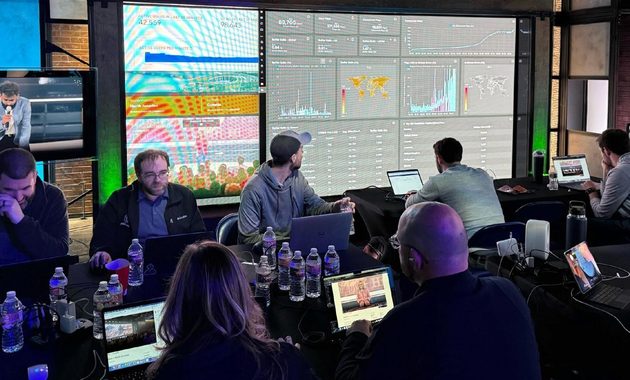
OTT traffic analytics can reveal where audiences came from, how many people joined, whether traffic peaked during a particular segment, and which devices carried the most viewing.
YouTube’s current Live Control Room provides examples of the type of information modern broadcasters can monitor, including concurrent viewers, peak concurrent viewers, average view duration, chat activity, traffic sources, playback locations, and devices.
That gives operators several useful signals:
- Concurrent viewers show the size of the audience right now.
- Peak viewers reveal the strongest moment of the broadcast.
- Average view duration indicates whether people actually stayed.
- Traffic sources show how viewers discovered the stream.
- Playback data exposes device and delivery patterns.
This is where viewer retention metrics become more valuable than raw view counts.
A channel with 500,000 short visits isn’t necessarily healthier than one with 150,000 viewers who stay for most of a two-hour program.
For advertisers, that distinction matters enormously.
Research and measurement companies are increasingly looking beyond simple reach. Nielsen, for example, combines streaming, traditional television and device data in its audience measurement approach, while TVision measures second-by-second viewing and attention signals.
For broadcasters, the practical lesson is straightforward: don’t optimize only for people who arrive. Optimize for people who stay.
That also affects advertising strategy. If retention consistently collapses immediately after a particular ad break, the problem may not be audience quality. The break itself could be poorly timed, too repetitive, or simply too long.
3. Cloud Broadcasting Infrastructure Makes Large Scale TV Distribution More Flexible
Traditional broadcast infrastructure often required dedicated hardware, fixed facilities, and substantial capacity planning.
Cloud architecture changes that equation.
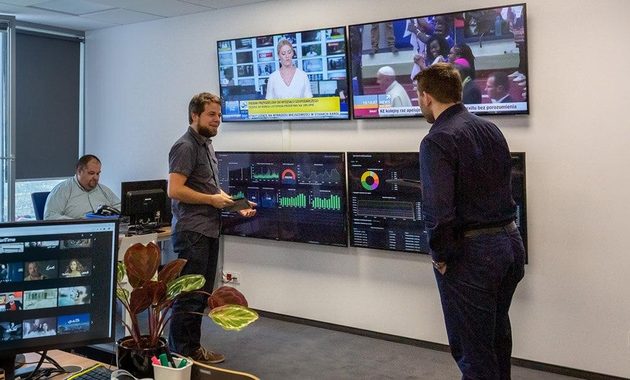
cloud broadcasting infrastructure can combine live ingest, transcoding, packaging, ad insertion, storage, analytics and CDN delivery into a software-driven workflow.
A simplified architecture looks like this:
Live source → Encoder → Cloud ingest → Transcoding → Packaging → Ad insertion → CDN → Viewer
AWS documents a similar live workflow using MediaLive for transcoding, MediaPackage for packaging, MediaTailor for ad insertion, and CloudFront as the CDN.
The advantage isn’t that cloud automatically makes broadcasting cheap. It doesn’t.
The real advantage is flexibility.
A broadcaster can create multiple video renditions, distribute them across regions, integrate advertising logic, and scale delivery without rebuilding an entire physical facility.
Recent industry deployments show this transition happening in practice. AccuWeather, for example, has been reported as moving toward a unified cloud-based broadcast ecosystem covering linear TV and streaming operations.
For smaller broadcasters, the same principle can be applied without recreating a national network.
Start with:
- reliable cloud ingest
- adaptive bitrate encoding
- CDN delivery
- basic audience analytics
- server-side advertising when revenue justifies it
Then add personalization and deeper measurement as the audience grows.
For a closer look at the public-service side of this ecosystem, this review of public television live access in 2026 gives useful context on how traditional television access is adapting to online distribution.
The smartest operators won’t chase every new streaming feature. They’ll build a workflow where OTT traffic analytics, viewer retention metrics, and advertising performance can actually influence programming and distribution decisions.
That’s the real shift.
Television is no longer just a signal being transmitted outward.
It’s becoming a feedback loop.
Q&A
How do broadcasters decide which advertisement each viewer receives?
Usually through an ad decision server that evaluates the viewing session, campaign rules, available inventory and targeting information before returning an appropriate creative.
Does server-side ad insertion guarantee higher advertising revenue?
No. It improves the technical ability to personalize and deliver advertising, but revenue still depends on audience quality, demand, fill rate, pricing, campaign performance and retention.
Is cloud broadcasting always cheaper than traditional broadcast infrastructure?
Not necessarily. Cloud shifts spending from large upfront hardware investments toward usage-based infrastructure, software and service costs. It becomes particularly attractive when flexibility and multi-platform distribution matter.


Riku Aonuma previously worked as a programming researcher for an entertainment media company covering live concerts, esports tournaments, television specials, and cultural events. He has spent more than nine years checking broadcast schedules, comparing viewing platforms, and preparing event guides for online audiences. His articles help readers find legitimate ways to watch live content while understanding time zones, availability, and platform restrictions.